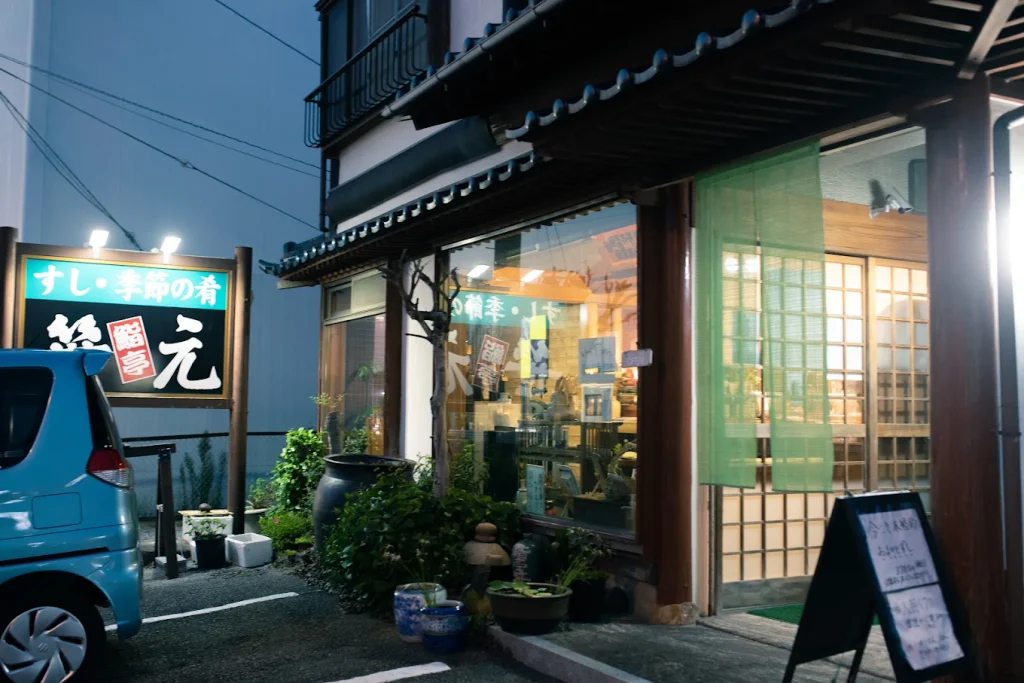
Cross the Tokyo Bay Aqua-Line—the road that slips through an undersea tunnel between Tokyo and the Boso Peninsula in Chiba—and after a little over an hour behind the wheel, you arrive in Tateyama (館山), with wide-open sea views and an easygoing pace. It has long been a favorite weekend drive, known as much for its local seafood as for its beautiful coastline.
The place I want to take you to today is 鮨亭 笹元 (Sushitei Sasamoto), the sushi restaurant I have visited almost every time I have come to Tateyama for more than ten years.
Let me show you what has kept me coming back for a decade—and what the food actually feels like when it reaches the counter.
Not Your Everyday Sushi: Boso’s Jizakana and Warm Yaki-zushi
Tokyo has no shortage of dazzling sushi counters, but I have stayed loyal to Sasamoto for ten years because its lineup could only come from this particular stretch of coast.
The heart of the meal is jizakana (地魚)—local fish from the waters off Boso. Tateyama sits between the calm waters of Tokyo Bay and the powerful Kuroshio Current in the Pacific, creating rich fishing grounds with a remarkable variety of fish throughout the year. Sasamoto is generous with everything from prized local species that would command steep prices in central Tokyo to seasonal fish that taste their best only when sliced close to where they were landed. You might get gleaming aji, or horse mackerel, and hamachi or buri, both names for yellowtail at different stages, alongside fish you may never have heard of before they reached the chef’s board. Even after ten years, I still walk in wondering what the sea has brought today.
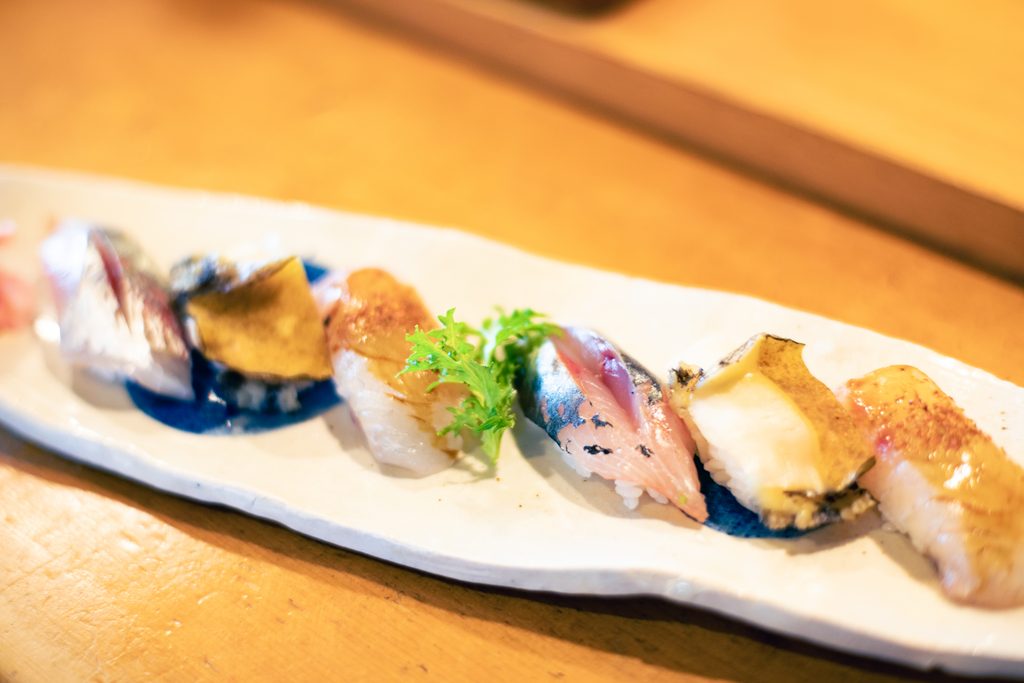
Sasamoto is especially known for yaki-zushi (焼きずし), nigiri with the skin side briefly seared and served while still warm. The kinmedai (キンメダイ)—splendid alfonsino, also called golden-eye snapper—and kuromutsu (黒ムツ), or Japanese bluefish, often arrive toward the end of the course, and they are unforgettable. Eat them before the warmth fades, and the gentle smoky aroma gives way to rich fish oils that melt right into the rice.
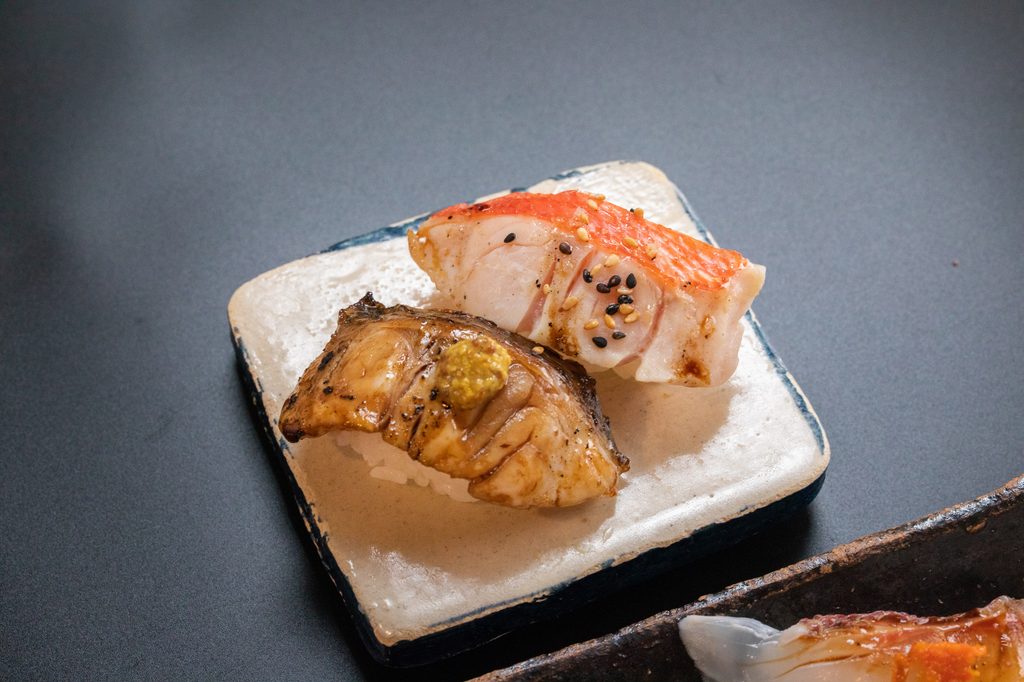
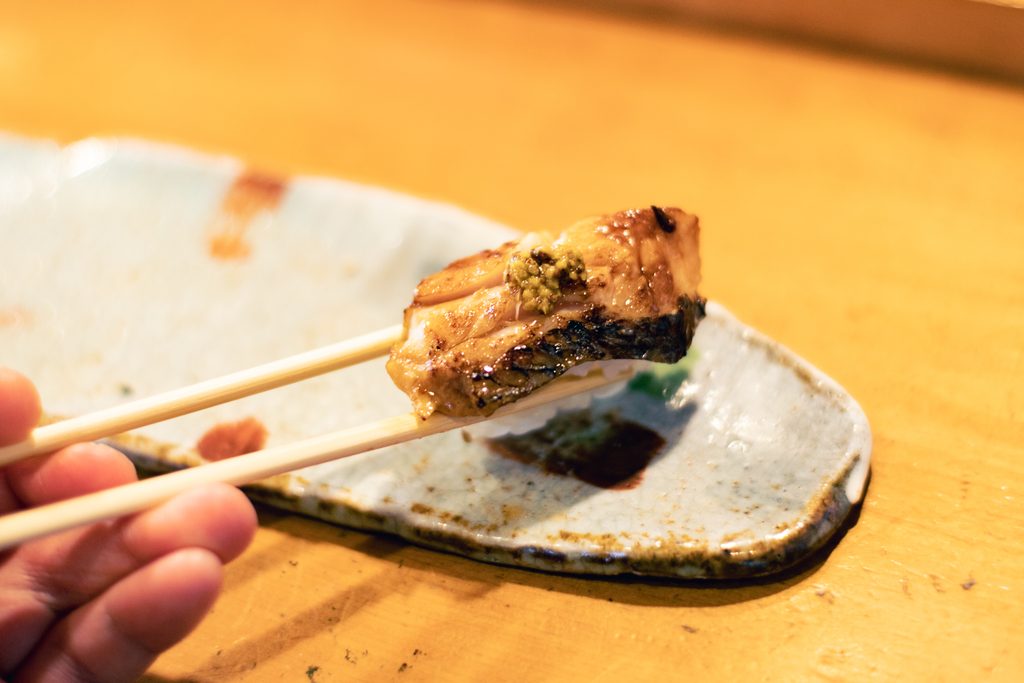
The chef will tell you, “No soy sauce—eat it now, while it’s hot.” The moment it touches your tongue, you understand exactly why.
The Pleasure of Omakase, One Piece at a Time
At many neighborhood sushi restaurants outside the big cities, every piece arrives together on one large round plate. Sasamoto’s omakase is different: the chef shapes and serves each piece across the counter in a carefully chosen sequence.
The course begins with whichever local fish looks best that day. Sometimes edamame, dressed goya (bitter melon), or namerou—minced raw horse mackerel—appears as an appetizer to wake up your appetite.
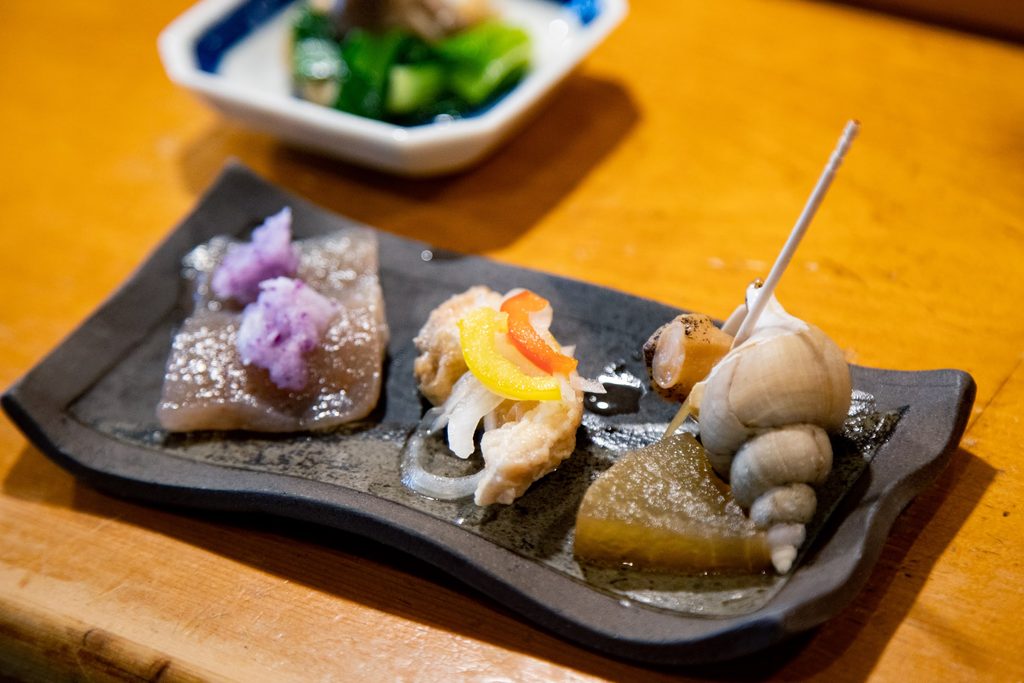
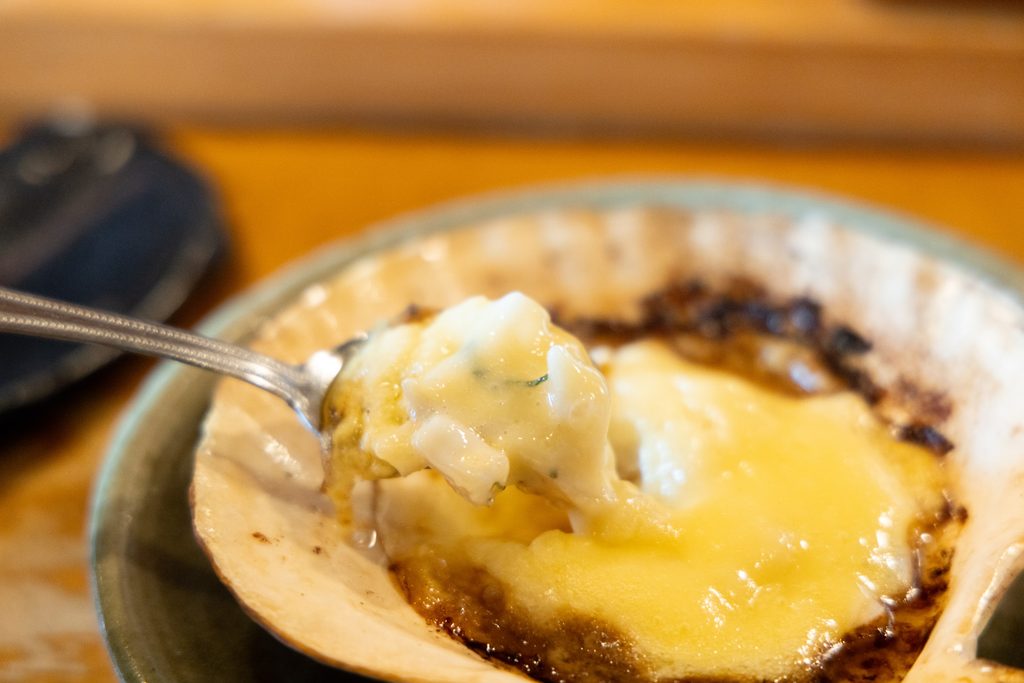
Then may come toro, the meltingly tender fatty tuna, followed by rich uni, or sea urchin. On some visits, awabi—abalone—unexpectedly appears in the middle of the course. The iso gratin, a seafood gratin with a lovely balance of mayonnaise and shellfish, and umami-packed oysters dressed in oil are excellent with a drink.
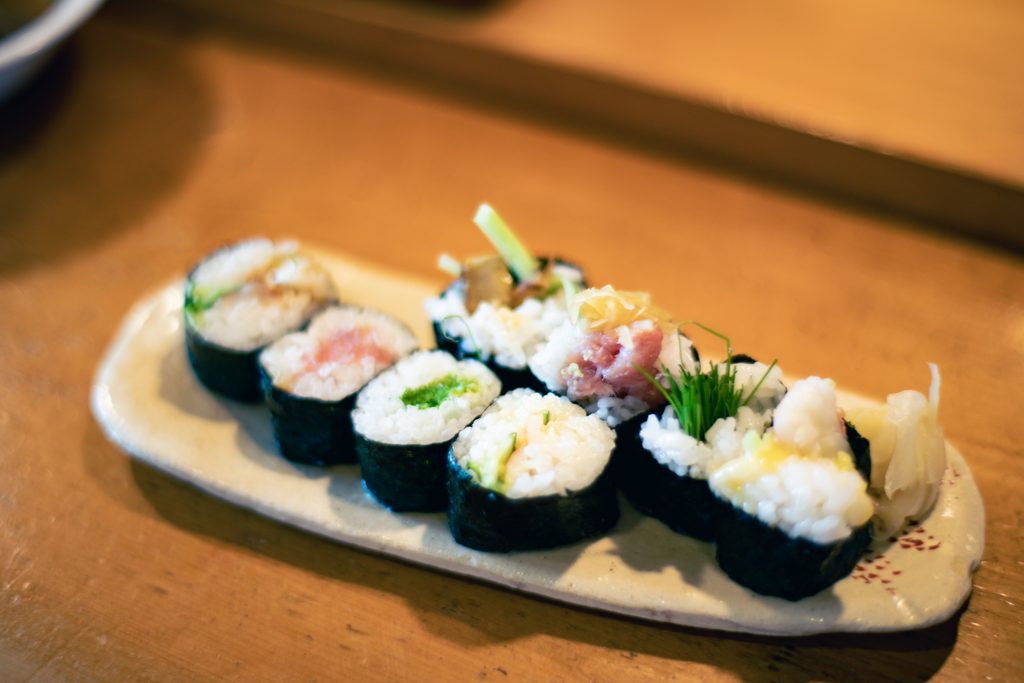
The hand rolls at the finish are anything but routine. There might be torotaku, a tuna and pickled daikon roll with a playful crunch, a shrimp salad roll, bright shellfish with ponzu, or squid with ponzu—choosing among them is part of the fun every time. A bowl of savory miso soup with kajime, a local seaweed with a silky texture, settles the stomach along the way. And I still remember the cooling freshness of the mizunasu (水茄子), a pale Japanese eggplant, served as sushi on one especially hot summer day.
Friendly Banter with the Chefs—and Where to Sit
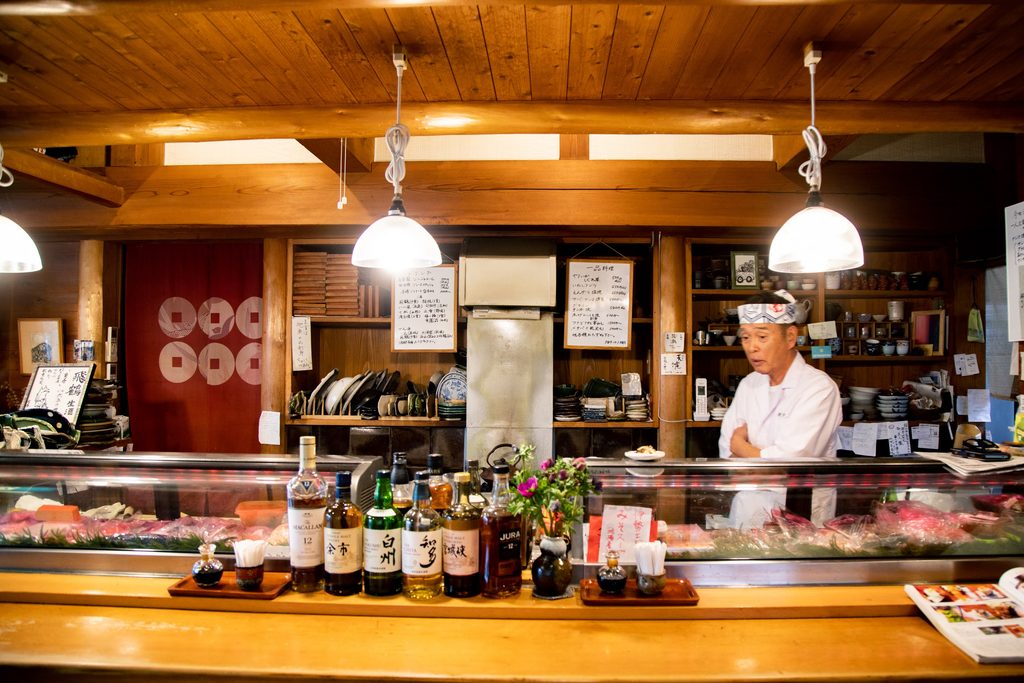
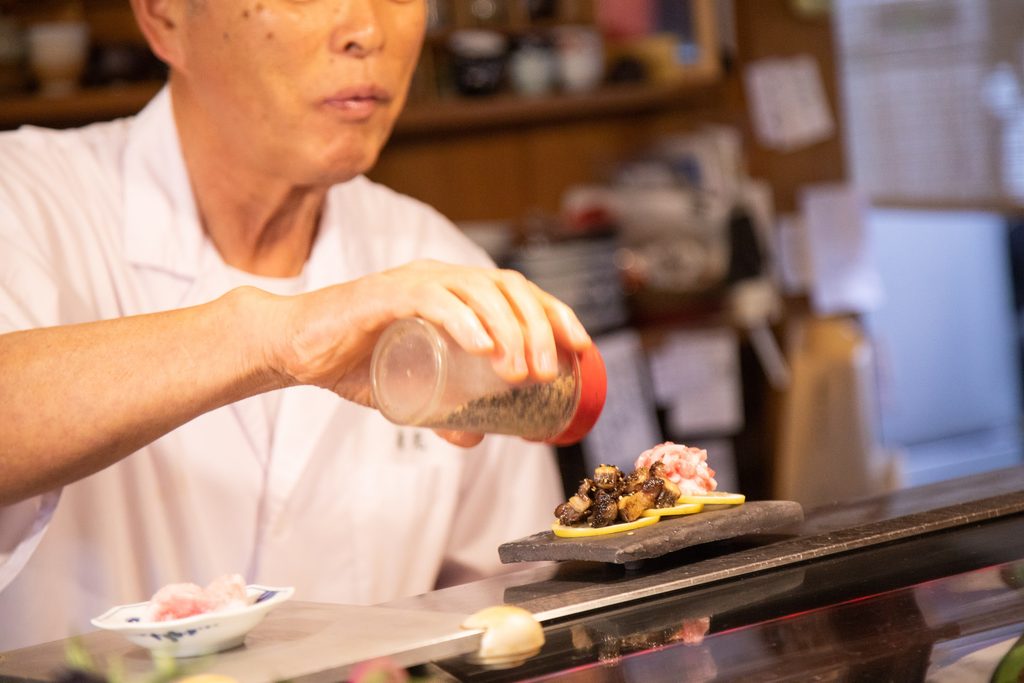
Open Sasamoto’s door and the lively counter is the first thing you notice. I always ask to sit there because chatting with the two chefs is one of the best parts of the meal. They will proudly tell you about the day’s catch and may even point you toward a quiet Tateyama spot to visit afterward. It is the kind of local connection that makes a trip memorable, and it is no surprise that out-of-town guests and taxi drivers alike become regulars.
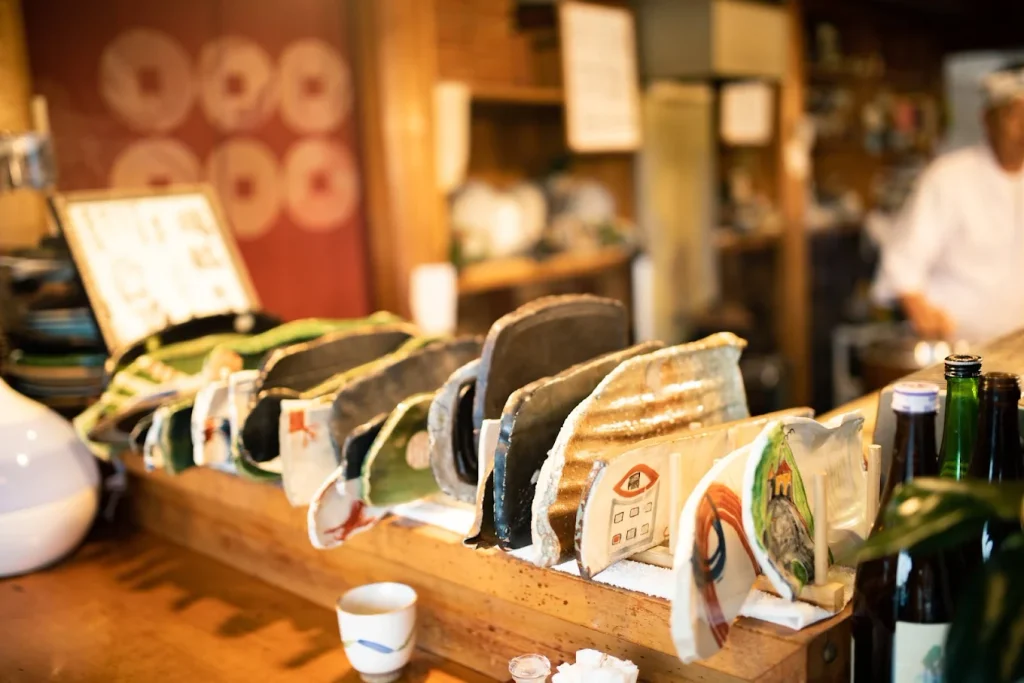
If you would rather linger over a quiet conversation with your companions, choose a table farther inside or upstairs. There are 46 seats in all—22 on the first floor and 24 on the second—and the upstairs space is much more comfortable for a group.
“Is That Really the Price?” Remarkable Value
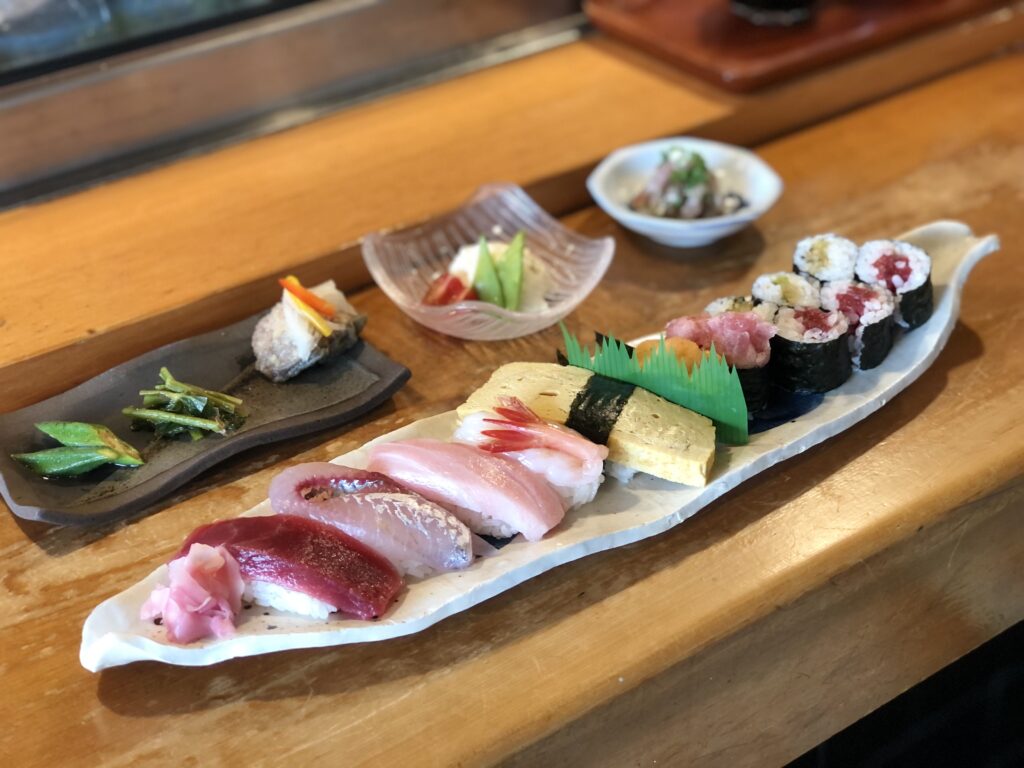
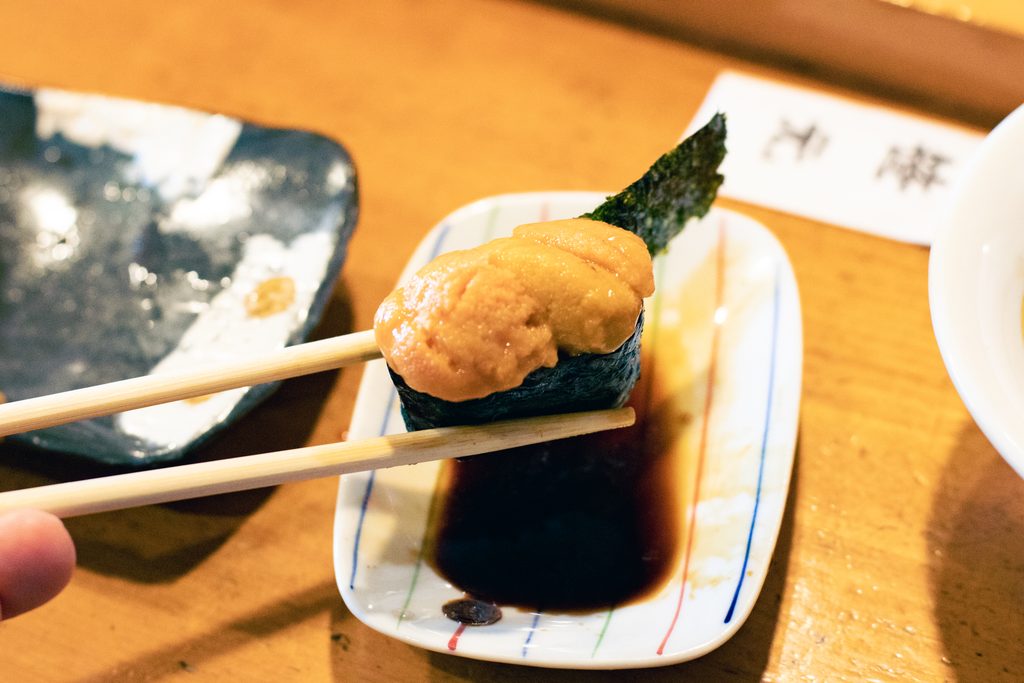
An omakase of this quality in Tokyo can leave your wallet feeling noticeably lighter. Sasamoto, though, offers astonishing value. The recommended lunch sushi is in the 2,000-yen range, while a proper omakase nigiri dinner usually runs 4,000–5,000 yen. Friends I bring are always amazed that a course at this price can include awabi, toro from hon-maguro—Pacific bluefin—that rivals otoro, the fattiest cut, along with uni and warm kinmedai yaki-zushi topped with a touch of mustard.
There is a reason its Google rating remains a solid 4.3 as of 2026.
Getting There: Practical Tips from a 10-Year Regular
If you are making the drive, leave the Tateyama Expressway at Tomiura IC (富浦インター) and follow Route 128 for about 10 minutes / 7 km. There is free parking for about 10 cars right in front of the restaurant, which makes the stop wonderfully easy.
By train, get off at Tateyama Station on the JR Uchibō Line (内房線). It is about 25 minutes on foot from the station, so I recommend taking a taxi from the station for about 1,300 yen.
A Seven-Eleven and Don Quijote are both within a five-minute walk, so you can stretch your legs before or after the meal. There is also a Starbucks five minutes away by car. I nearly always stop there afterward, happily patting my full stomach and letting the satisfaction linger.
Confirm the Schedule Before You Go
Official hours are lunch 11:30–14:30 and dinner 17:00–21:00, and the restaurant is closed Thursday.
Sasamoto also takes an extended break about twice a year. Different sites may show different dates because their updates do not always line up, so check Instagram or, before setting out on a long drive, use the surest option: call 0470-23-6311 to confirm that the restaurant is open and make a reservation.
Some old sites still say that cards are not accepted, but today the restaurant takes major cards including VISA, JCB, and Amex, as well as PayPay, Suica, PASMO, QR payments, and most other common cashless options.
鮨亭 笹元 serves a table full of the blue waters of Tateyama. I hope the restaurant I have loved for more than a decade becomes one of your own lasting food memories. And I hope travelers from beyond Korea will come to taste its warm yaki-zushi. If you are out for a drive in Tateyama, this is one stop I wholeheartedly recommend.
鮨亭 笹元 at a Glance
- Address: 〒294-0037 千葉県館山市長須賀55-7 (55-7 Nagasuka, Tateyama, Chiba)
- Phone: 0470-23-6311 (Closures can vary, so calling before your visit is recommended)
- Hours: Lunch 11:30–14:30 / Dinner 17:00–21:00 (Call ahead to confirm last orders)
- Closed: Thursday (plus two extended breaks each year)
- Parking and payment: Free parking for about 10 cars / Cards and electronic payments including PayPay accepted
- Instagram: @sushisasamoto
- Official website: sushiteisasamoto.com
- Gurunavi (ぐるなび): ghsn700.gorp.jp
- Hot Pepper: Book online
- Retty: retty.me