This article was written on 5 November 2026.
Taking a photo in Japan requires more than just framing the shot. Before you press the shutter, you need someone’s permission. People who raise their cameras right away aren’t trying to be rude; they are just jumping the gun. You should always ask before you frame the shot.
If you take photos without asking, you will likely be met with an uncomfortable silence. While a polite refusal is spoken, silence means you’ve already offended them. Even if people take photos freely in your home country, asking for permission in Japan is a basic etiquette you shouldn’t skip. Someone who asks 「写真を撮ってもいいですか」 before lifting the camera usually gets a smile and 「どうぞ」.
Permission is not a favor
There are two main types of photo requests in Japanese: asking if you can take a picture, and asking someone to take a picture for you. If you mix up the phrases, people won’t understand what you want them to do.
When you want to photograph a place, a dish, or an object, you are asking for permission.
写真を撮ってもいいですか。
May I take a photo?
For shop staff, shrine attendants, or strangers, use a slightly more polite phrase.
写真を撮ってもよろしいですか。
Would it be all right if I took a photo?
While 「いいですか」 is perfectly fine, it can sound a bit casual when speaking to someone you don’t know. When traveling, it’s always safer to use the more polite option.
If you want someone to be in the photo with you, you should ask specifically for that.
一緒に写真を撮ってもいいですか。
May I take a photo with you?
When you hand your camera to someone else, you are no longer asking for permission—you are asking for a favor. Using 「てもいいですか」 here would sound strange because it implies you are the one giving permission.
写真を撮っていただけますか。
Could you take a photo for me?
一枚撮っていただけますか。
Could you take just one?
The word 「一枚」 is used to count flat objects like photos. By asking for just one shot, you let the person know you won’t take up too much of their time. It’s polite to keep your request small; asking for a single photo is a favor, but asking for a full photoshoot is a burden.
When the answer is no
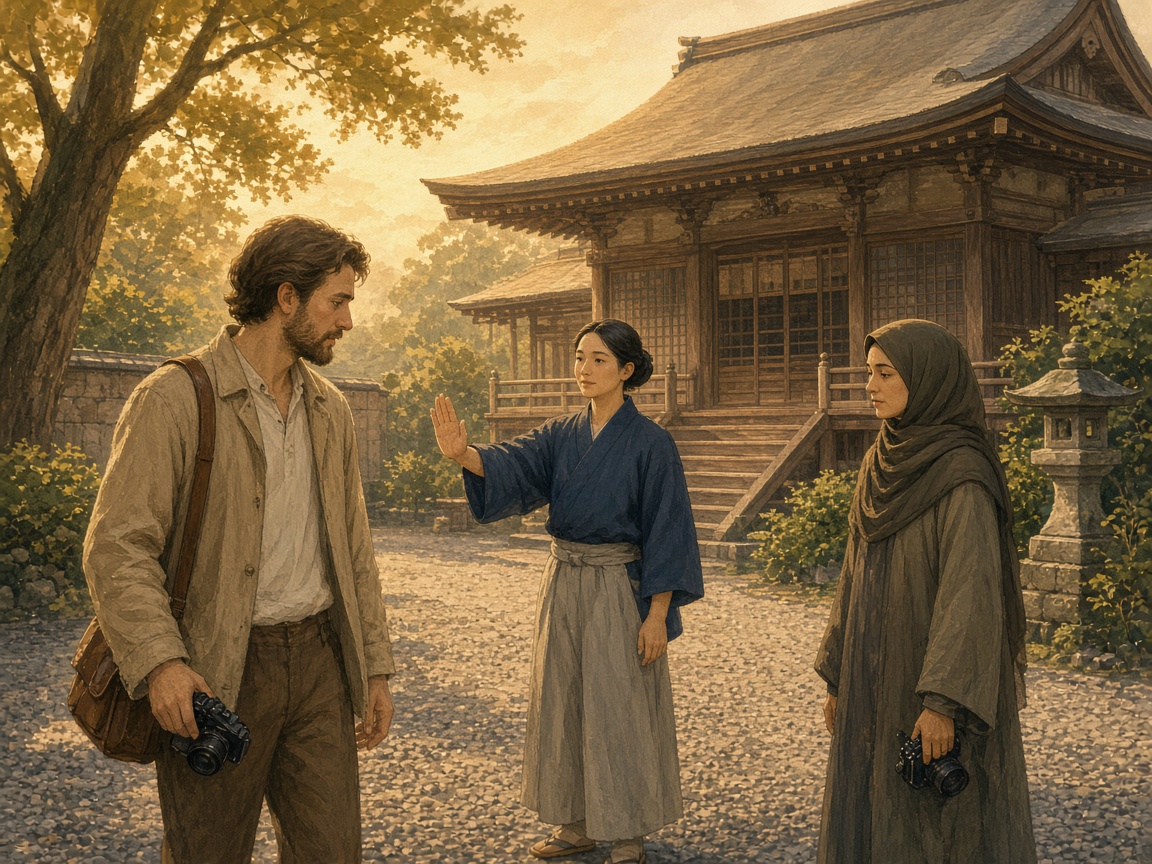
Just memorizing how to ask isn’t enough. The real awkwardness happens when someone says no (「だめです」) and the tourist tries to negotiate or sneak a picture anyway.
Here are some common replies you might hear:
- どうぞ。 Go ahead.
- はい、大丈夫です。 Yes, that’s fine.
- 撮影はご遠慮ください。 Please refrain from taking photos. This is a polite but firm way of saying no.
- お料理だけならどうぞ。 You can photograph the food, but usually not the restaurant interior or other guests.
- フラッシュはご遠慮ください。 Taking photos is fine, but using a flash is not.
- 人の顔は避けてください。 Please don’t include people’s faces in the shot.
The phrase 「ご遠慮ください」 sounds softer than a direct “don’t do it” (「ないでください」), but it means exactly the same thing: no photos. The best response is to say 「わかりました。ありがとうございます」 (I understand, thank you) and put your camera away. Don’t argue or ask why it’s not allowed; you don’t have a right to an explanation.
Taking photos secretly without permission isn’t a language issue; it’s bad manners. No matter how politely you apologize later, you can’t undo the fact that you took the photo.
The shop, the shrine, the lane
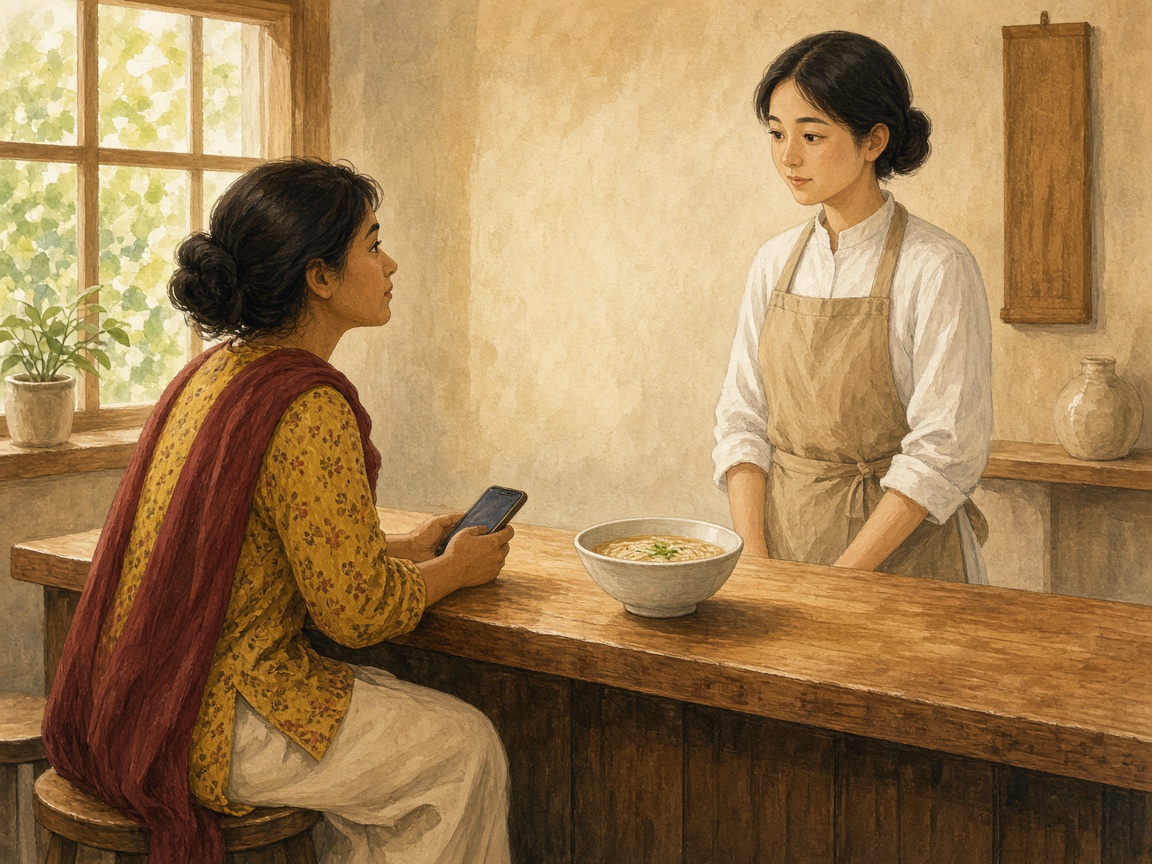
Food photography is where tourists most frequently cross the line. Taking a close-up of your own meal is usually perfectly fine. However, taking pictures of the open kitchen, other customers, or the chef at work requires separate permission. If you are in a small restaurant with other diners, it’s best to ask before you even sit down.
料理の写真を撮ってもいいですか。
May I photograph the food?
Rules at shrines and temples vary depending on where you stand. The outdoor courtyard might be fine, but the inner hall or the area right in front of the altar might prohibit photography. If you see a sign with a camera crossed out, obey it—even if you can’t read the Japanese text. If a staff member is nearby, it is always safest to ask them directly.
Residential streets and private lanes, such as those in Kyoto’s Gion district, have stricter rules than public tourist areas. Chasing after a maiko or geiko for a photo isn’t street photography; it’s harassment. If a neighborhood has a sign restricting entry or photography, you must respect it, regardless of what your guidebook says. Instead of worrying about exactly how much the fine is, simply put your camera away whenever you see a warning sign.
You must be equally cautious when taking photos on trains, in public baths, or in changing rooms. You can add 「ここで」 (here) to clarify that you are asking about the location.
ここで写真を撮ってもいいですか。
May I take a photo here?
When the camera leaves your hand
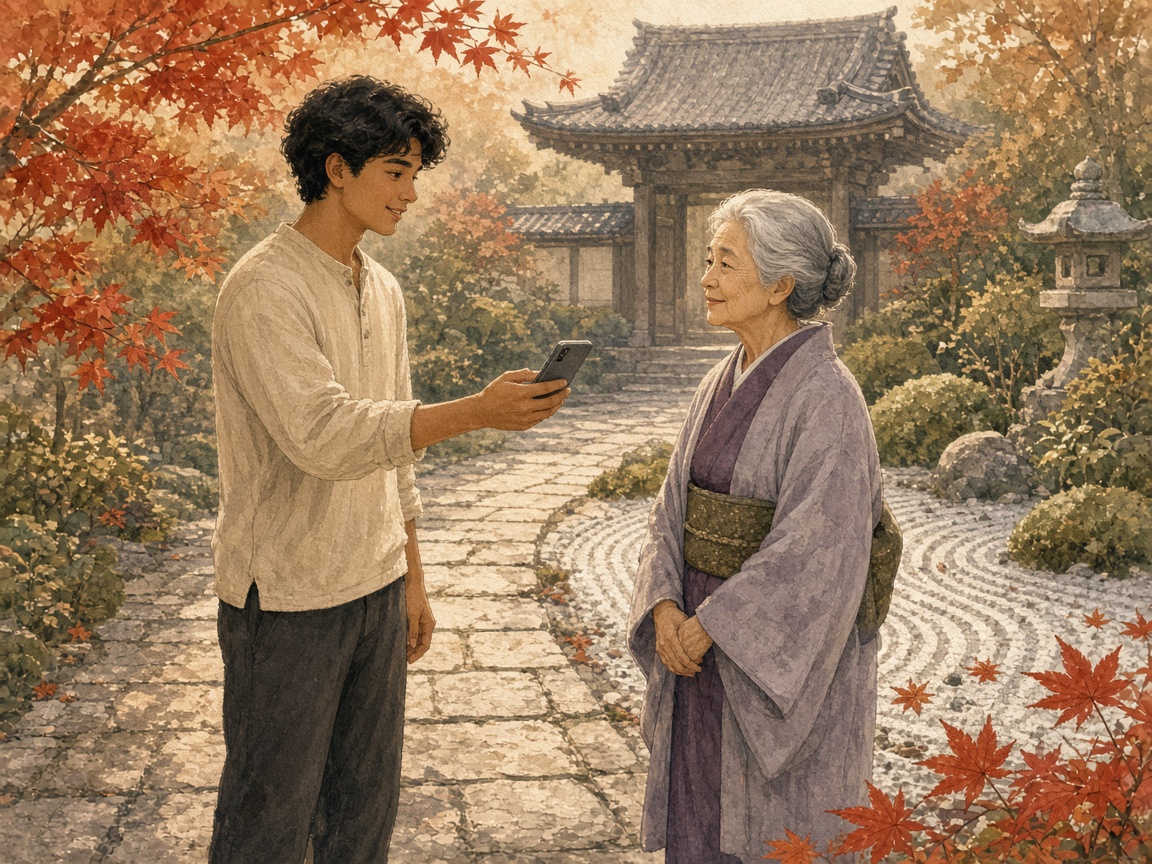
When someone agrees to take your photo, keep things simple. Don’t make them learn how to use your camera. Just show them the button, tell them if you want a portrait or landscape shot, and say thank you.
すみません。 Before you start.
ここを押してください。 Please press here.
縦でお願いします。 Portrait, please.
横でお願いします。 Landscape, please.
もう一枚お願いします。 One more, please. Then stop.
ありがとうございます。 When the phone comes back.
If they ask where to press (「どこを押せばいいですか」), just point and say 「このボタンです」 (This button). A lecture on the app is not required for one frame.
When asking for permission to shoot a location, you can reassure people by stating your intentions upfront.
人は写しません。
I won’t include people.
This is a promise, so make sure you keep it. If someone walks into your shot, lower the camera and wait for them to pass. Having permission to photograph a building doesn’t give you the right to photograph the people walking in front of it.
Asking to be in the photo
Asking someone to take a picture together (「一緒に」) is a significant request because it takes up their time. Whether you’re asking a server, a temple attendant, or the person sitting next to you, give them the space to say no easily. Asking 「いいですか」 after you’ve already pointed your camera at them is pushy and impolite.
It is equally important to react gracefully if they decline. If you expect them to say yes (「どうぞ」), you might be visibly disappointed if they say no (「結構です」). Smile, accept their answer, and move on. There will always be other opportunities.
One scene, if you want the dialogue
This article covers the essential phrases you need on the go. If you want to hear how a full conversation sounds in real life—asking for permission, requesting a favor, and respecting a venue’s rules at a temple garden—we have a separate lesson for that. Listen to the full dialogue at May I take a photo? — travel Japanese.
For your trip, you only really need four phrases: “May I,” “Could you,” “Understood, thank you,” and “I won’t include people.” The rest is just listening to their answer. Knowing the right Japanese won’t automatically improve your photography, but asking first shows that you respect the local people and their spaces.
Questions that keep coming up
If I only shoot the food, do I still ask?
Taking a close-up photo of your own meal is usually fine without asking. However, you should definitely ask if the restaurant is crowded, if the counter is small, or if you want to include the chef in the shot. Even if a restaurant’s policy is “food photos only,” they won’t be able to tell you that if you don’t ask first.
Can I ask in my own language?
You can, but when staff are busy, a long explanation in English takes up their time. A quick question in Japanese gets you an immediate yes or no. You don’t need a perfect accent; making the effort to ask respectfully is what truly matters.
What if I already took it?
Apologize and delete the photo. Saying 「すみません。消します。」 (I’m sorry, I’ll delete it) is enough. Don’t try to make excuses. No amount of explaining will fix the fact that you took a photo without permission.