This article was written for 9 November 2026.
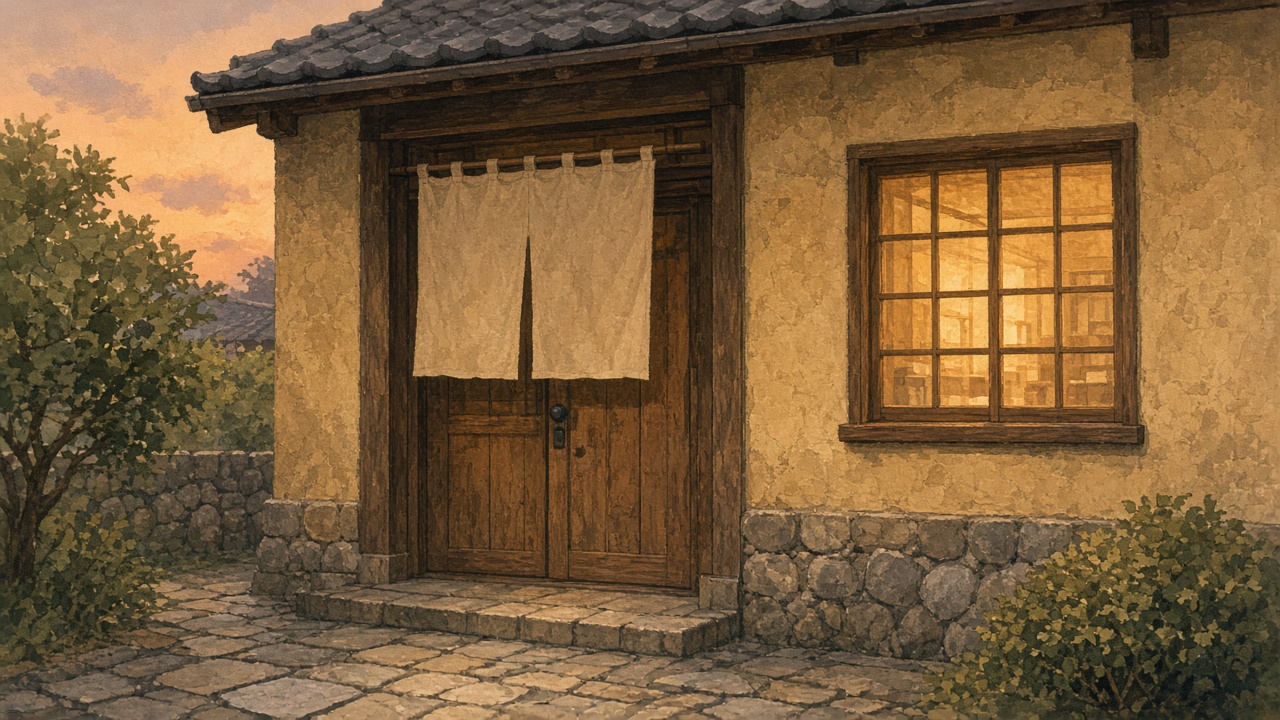
When you get sick on a trip, the first choice is not “a hospital.” It is which door. A fever, a stomach, a small cut belongs at a neighborhood clinic. A large hospital often expects a referral, and the wait is longer. Trouble breathing, fading consciousness, or bleeding that will not stop is an emergency. In Japan the ambulance and fire number is 119. The police number is 110.
The sentences are the same no matter which country you came from. Name the pain, say you have no appointment, and leave with a receipt. You do not need medical vocabulary.
Which door
A クリニック is a neighborhood clinic. Colds, stomachs, skin, small injuries belong there. A 病院 is a larger hospital. Walking into the large one first can mean a long wait and a suggestion to go to a clinic instead. 救急 is emergency care. At night, look for the emergency desk, not the daytime lobby.
For help in another language, start with the Japan National Tourism Organization visitor line. Use the number printed on their current page. This article does not freeze a phone number, because a stale number is worse than none when you are ill.
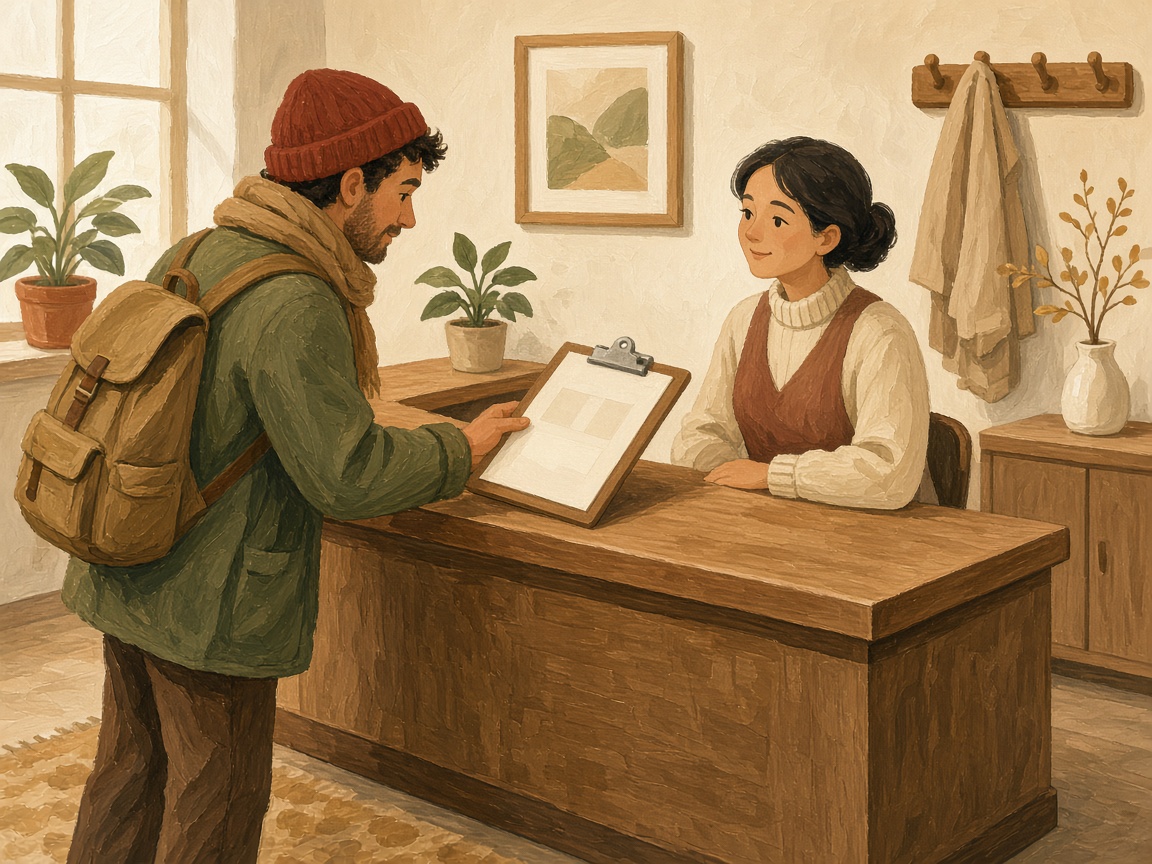
The desk and the form
At the door:
すみません。具合が悪いです。
Excuse me. I feel unwell.
熱があります。 I have a fever.
頭が痛いです。 My head hurts.
お腹が痛いです。 My stomach hurts.
予約はしていません。 I don’t have an appointment.
Some clinics take walk-ins. Some do not. Say you have none, then follow their answer. The form is a 問診票. It asks your name, the symptom, allergies, and medicines you already take. If you cannot fill it in:
日本語が苦手です。これを書いていただけますか。
My Japanese is weak. Could you write this for me?
Pointing is enough to start. ここです。 It’s here.
Money and medicine
Without Japanese health insurance, you pay the visit yourself. The amount depends on the clinic and the treatment. This article does not invent a price. Ask before you sit down.
保険がありません。いくらぐらいかかりますか。
I don’t have insurance. About how much will this be?
カードは使えますか。
Can I pay by card?
Some desks take cards and some do not. Keep cash in reach. Medicine is often not handed over inside the clinic. You take a 処方箋, a prescription, to a nearby pharmacy. The pharmacy sentences are in pharmacy Japanese. The emergency room is a different lesson: emergency Japanese. A lost wallet or a lost street belongs at a 交番, a neighborhood police box.
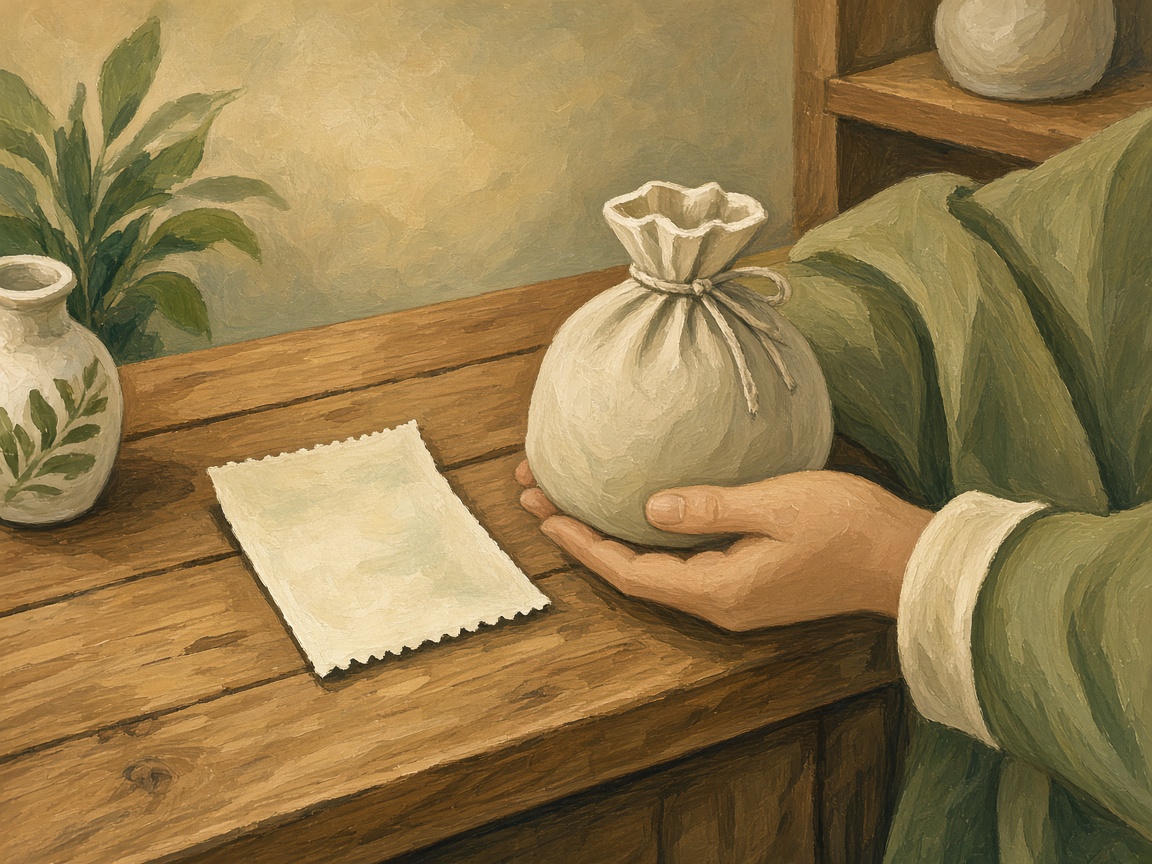
The papers an insurer asks for
Travel insurance usually wants two papers. A 領収書 is the receipt. A 診断書 is a medical certificate. The certificate is not automatic, and many clinics charge to write it. They will tell you the fee. Do not guess it.
領収書をください。
May I have the receipt?
診断書をお願いできますか。
Could I ask for a medical certificate?
Check whether your insurer actually wants the certificate before you pay for one.
Questions that keep coming up
Can I go without an appointment?
Many clinics allow it. The ones that do not will say so at the desk. An emergency is not an appointment problem.
Can I pay by card?
Sometimes. Ask at the desk, and carry cash.
Where do I get the medicine?
Often at a pharmacy, with the prescription. Some clinics hand it to you. Follow the next sentence the desk gives you.