This article was written on 6 November 2026.
AI tools change fast. Screen names do not. A header, a form, a dialog — these words have meant the same shapes for years. Button labels and product menus will move. Read this as a way to ask for a screen, not as a tour of anyone’s buttons.
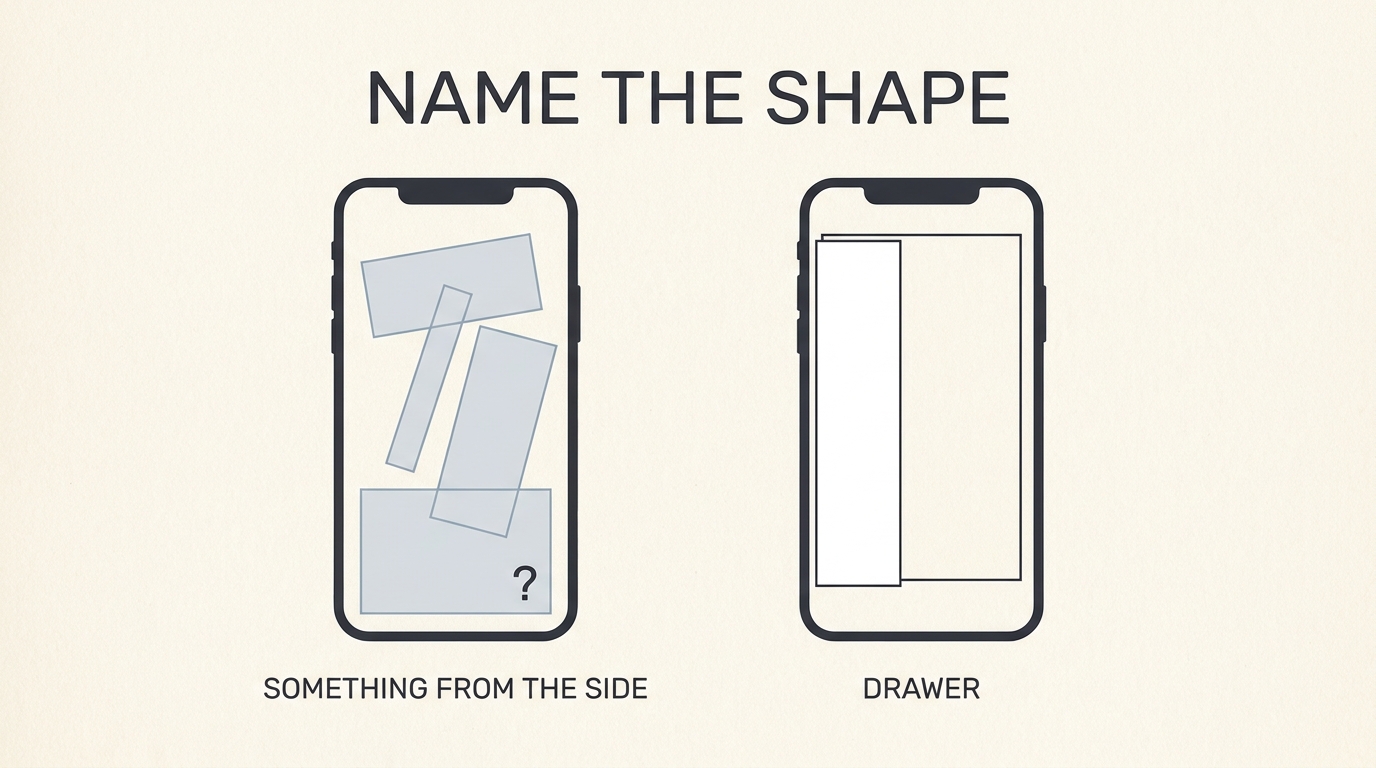
Most people already know the screen they want. They can see it. What they cannot do is name it, so they describe a gesture. “Something comes in from the side.” “The boxes are different sizes.” “It pops up and I have to deal with it.” A model can build from that. It will also guess. The next person who asks for “something from the side” may get a menu, a panel, or a new page. Same sentence. Three screens.
The gap is not taste, and it is not that some languages are late. The models learned the names of screens mostly in English, from design systems that have used those names for a long time. If your language has a stable word, use it, and put the English in parentheses the first time, so a reader and a model share one object. If your language does not have a settled word, do not invent a pretty one. Explain the shape in one line, and keep the English. The English is the word you paste.
This is a practical kind of translation. A clinic receptionist in Jakarta, a teacher in Ulaanbaatar, and a shop owner in Tunis are not missing intelligence. They are missing the short English noun that a model already treats as a known part. Once that noun is in the sentence, the model stops inventing a part and starts arranging one. The local language still does the human work: it tells you what the shape is for.
A sentence the model does not have to finish for you
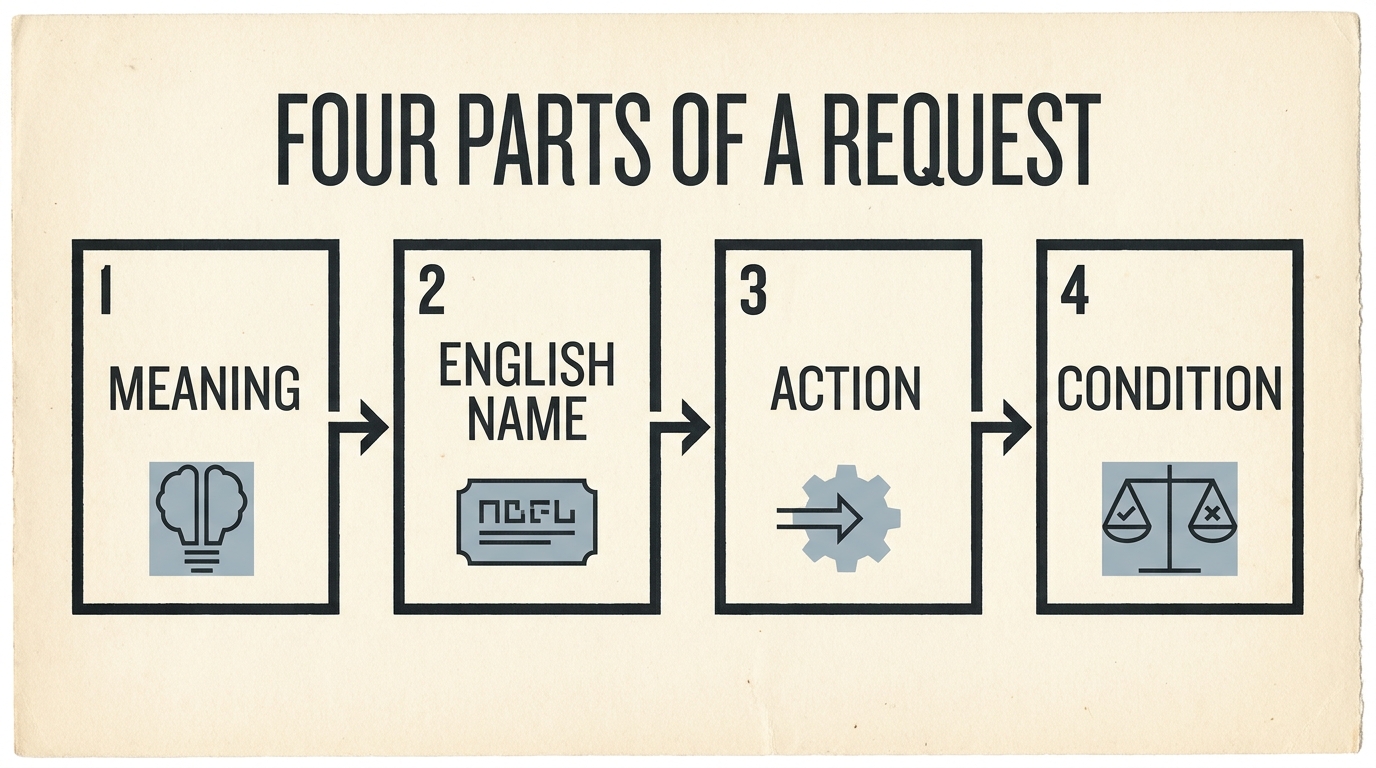
A useful request has four parts. The meaning, in your language. The English name. The action. The condition that ends it.
Vague:
When I press settings, something like a menu should come in from the side.
Named:
When I press Settings, open a drawer from the start edge. Close it with Escape, or with a tap outside the panel.
A drawer is a panel that slides in from the edge and leaves the page underneath in place.
The second sentence can sit under the English in your language. The line you paste stays in English, because that is the form most models match to a known component. “Start edge” matters more than “right.” On Arabic and other right-to-left pages, the start edge is on the right. A drawer that always opens from the screen’s right will feel backwards there. Say start edge, and let the writing direction decide the side.
The condition is the part people skip, and it is the part that saves a day. “Open a drawer” does not say how it goes away. A model will pick a close icon, or a swipe, or nothing. Then a person on a phone cannot leave. Name the exit in the same sentence as the entrance. Escape. A tap outside. A clear close control. One of those is enough. All three is kinder.
The same four parts work for almost any shape you will meet in the rest of this series. A dialog needs a reason to stop the page, and a way back. A toast, the small note that appears and leaves on its own, needs a duration and a rule that it must not be the only place an error is written. A card needs to say what is inside it, not just that the page should “look like cards.” The name without the condition is a costume. The condition without the name is the vague sentence you started with.
What you can ignore at the start
There is a long menu of screen fashions: glass that blurs the page behind it, grids where every box is a different size, pictures that slide sideways, backgrounds that move at another speed. You will meet the English names later, in one short box, so that you can recognize them when a model offers them. You do not need them to publish a first page. A person who learns forty decorations before they can name a header will feel busy and still be unable to brief the next screen.
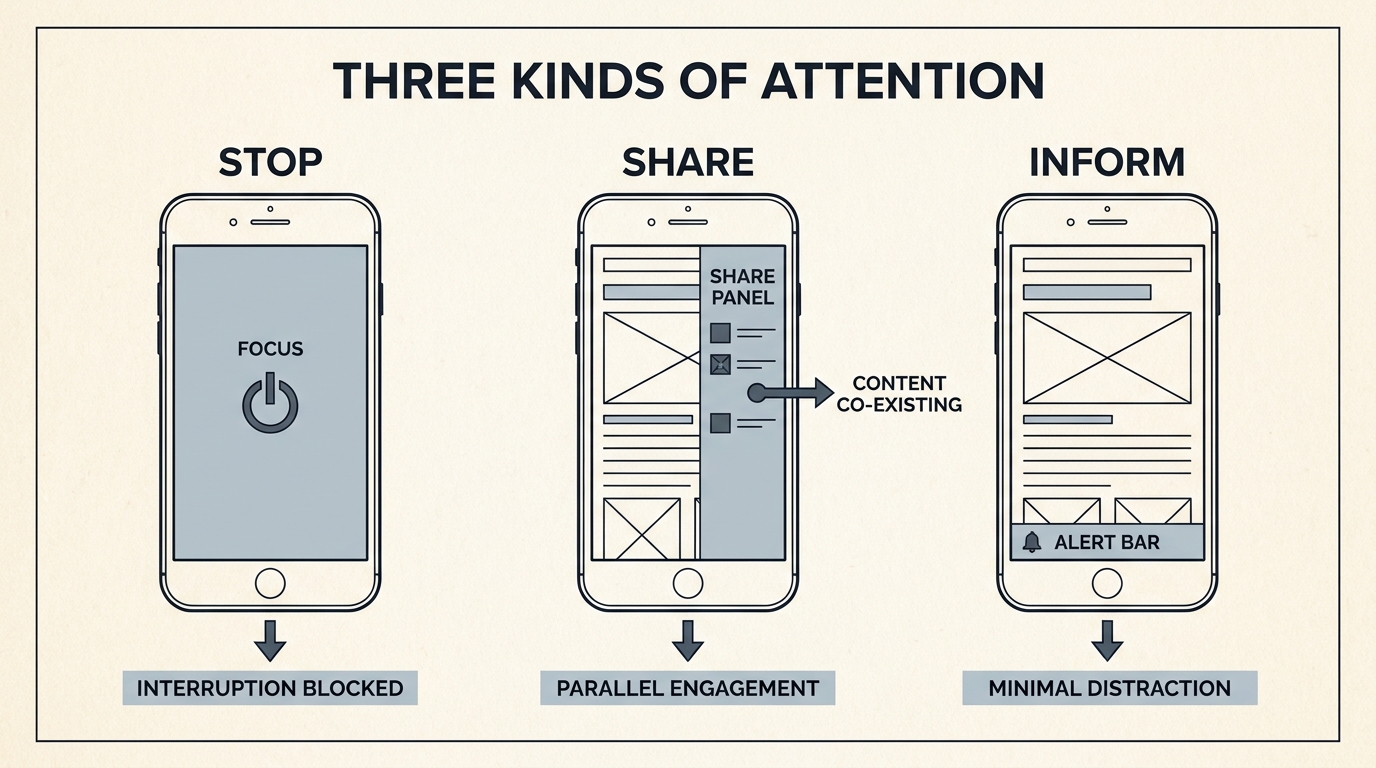
Start with the decision, not the decoration. Does this moment stop the person, share the page with them, or only inform them? Those are three different shapes. Everyday language collapses them into “a popup.” English interface language does not, which is why the English word is worth learning even when you think, write, and teach in another language. You are not switching your mind to English. You are borrowing one noun, the way a cook borrows the word for a pan that every kitchen already uses.
Keep a short list of the nouns you actually used this week. Five is plenty. If you asked for a header, a card, and a form, those three are your curriculum. Looking up a term you did not use is how glossaries become homework. The point of a name is that it was the missing word in a sentence you were already trying to say.
What changes at a desk
Naming a screen shortens the argument with the model. It also shortens the argument with a teammate who does not share your language. Two people can both point at “drawer” and mean the same interruption: the work stays visible, the extra panel is temporary, Escape puts it away. Without the name, they argue about taste. With the name, they argue about whether this moment should interrupt at all.
That second argument is the one worth having. A name is not a decoration. It is a decision about attention. A dialog in the center stops the page. A drawer shares the page. A short note at the bottom does not stop anything. People who are new to asking an AI for software often spend their first weeks requesting beauty. The weeks that actually move the work are the weeks they learn which shape stops a person, and which shape does not.
There is a social cost when this vocabulary stays inside one language. Tutorials arrive first where the models were trained. Everyone else is told to “just describe what you want,” which sounds democratic and produces guesswork. Describing what you want is still right. Doing it with the ordinary name of the part is how the description survives contact with the model. A school, a clinic, or a family shop can brief a page in Vietnamese, Hindi, or French, then paste one English sentence that a model will not reinterpret as a different part. The thinking stayed local. The part name was shared.
You do not need a long glossary before you build the first page. You need the next shape you are about to ask for, its English name, and the condition that closes it. The rest of this series is that path: the bones of a page, the ways of asking a person something, the ways of telling them what happened, and the small amount of motion that helps. A person who can name the screen can already brief a model, in any language, without waiting for a local design school to publish a dictionary.