This article was written for 11 November 2026.
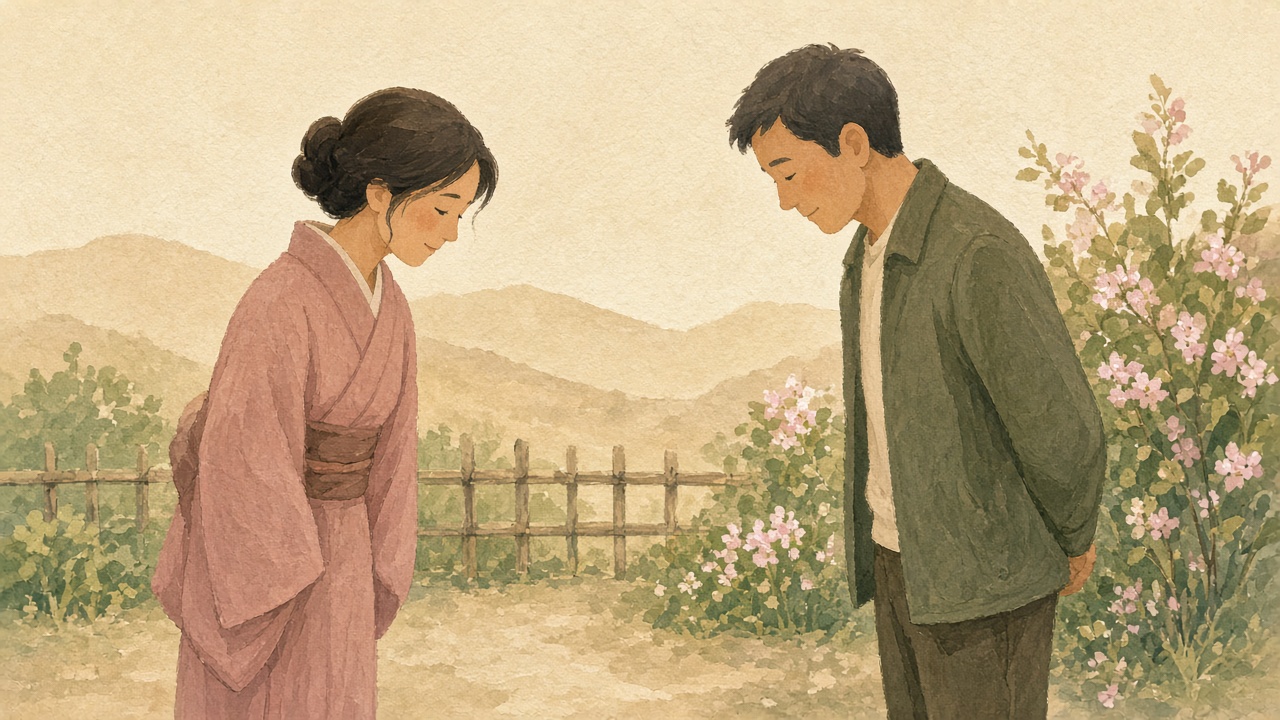
Translate Japanese さん as Korean 씨 and the sentence can be correct while the distance is wrong. さん is the ordinary margin after a name. 씨 is narrower. In subtitles it often sounds cold, or slightly like a costume.
The space after a name
To a stranger, a customer, a colleague, Japanese adds さん after the family name. Tanaka-san. You are not close, and you are not rude. Korean 씨 on a stranger’s name often sounds like a translation. A title, or 님, fills that space instead.
Drop さん and Japanese suddenly becomes intimate or looks down. Drop 씨 and Korean does not automatically become casual speech. They are not the same switch.
Job titles
Korean often puts 님 on the title: manager-nim, section-chief-nim. A Japanese office may use the family name plus さん, or the title alone. Render 部長 only as “Manager Kim” and the rank survives while the room’s distance dies. Render every さん as 씨 and the rank disappears.
Choose first whether the line is calling a person or calling a seat. If you cannot keep both, keep the one that will not insult the listener.

先生 is wider than “teacher”
선생님 already covers a lot of school. 先生 goes further: teachers, doctors, lawyers, politicians, masters of a craft. A doctor called 先生, turned only into “teacher,” walks into a classroom in Korean. If that scene’s habit is “doctor” or a respectful title, use the habit. A dictionary line is not the end of the choice.
After you are closer
ちゃん and くん sit toward children, friends, and people on the junior side. Used on a superior, they are not cute. They are rude. Getting along does not delete さん on a schedule. Listen to what they call you, and follow. Do not climb the ladder first.
Envelopes and email are stiffer. In formal Japanese, 様 is safer than さん. Korean mail sits nearer 님. 씨 in the first line of an email is how a translation announces itself.
A rule you can carry
When you see さん, carry “the distance is still polite.” Use 씨 only when that politeness is natural in Korean. When it is not, use a title, 님, or a sentence that does not nickname anyone.
Feelings and skill run into the same wall. Stress and 器用 each refuse to be one word.
Questions that keep coming up
Can I use 씨 for a senior?
In Korean it is often awkward. A title or 님 is safer.
What about ちゃん and くん?
Close people, children, the junior side. Not a boss.
What about email?
Japanese 様, Korean 님. Do not line さん up with 씨 and call it even.